ICICS 2026
International Conference on Informatics and Computer Science
18–20 June, 2026 · University of Georgia (UG), Tbilisi, Georgia
The International Conference on Informatics and Computer Science (ICICS 2026) will bring together leading researchers, academicians, and industry experts to present the latest innovations, trends, and challenges in computer science, informatics, and interdisciplinary applications. The conference provides an international forum for exchanging ideas, fostering collaboration, and advancing knowledge in emerging domains of digital transformation, artificial intelligence, and computational sciences. As part of the ICICS-2026 Conference, a special symposium will be held for doctoral students to present and discuss their research. We invite high-quality submissions of original research papers, case studies, and review articles addressing theoretical foundations, innovative methodologies, and real-world applications. Venue - University of Georgia (UG), Tbilisi, Georgia




Conference Topics
- Machine Learning and Cognitive Modeling
- Information and Communication Technologies
- Cybersecurity and Privacy
- Computational Mathematics and Modeling
- Logic, and Combinatorial Methods
- Adaptive and Reconfigurable Systems
- Reliability, Risk Analysis, and Fault-Tolerant Design
- Blockchain and Distributed Ledger Technologies
- Bioinformatics and Computational Biology
- Interdisciplinary Applications Across Science, Engineering, Economics, Health Informatics
- Special Symposium for Doctoral Students
Conference Proceedings
| Accepted articles will be published after conference with Digital Object Identifiers (DOIs) by The University of Georgia Publishing House, in the Conference Section. |

|
| High-quality papers presented at the ICICS 2026 after the conference will be selected for publication in the Springer Nature journal “Computational Mathematics and Modeling” , which is a research journal focusing on numerical and analytical methods of computational mathematics, mathematical modeling. Authors of selected papers will be invited to submit extended versions to the journal after the conference, accompanied by detailed publication guidelines. Articles will be indexed in: Scopus, Google Scholar, Research Gate. Metrics of Journal: artificia h-index 18, SCImago Journal Rank (SJR) 0.168, Impact Score 0.49, ISSN 1046283X, Best Quartile Q4. |

|
Paper Submission Guidelines
Full papers must present original and unpublished work. Submissions should be written in English and formatted according to the conference template. Authors are encouraged to use LaTeX to format their papers, using the style file and template below, you can also use MS Word. The formatted paper must be converted to PDF file and the number of pages should not exceed 4, please be careful that the paper size is set to A4. The template is based on the IEEE style.
Important Dates
| Conference Dates | June 18-20, 2026 |
| Papers Submission | March 2, 2026 |
| Notification of acceptance | March 23, 2026 |
| Final Papers due | April 24, 2026 |
| Registration Dates | May 29, 2026 |
| Final Program Publication | June 5, 2026 |
Registration Fees
| Until May 1, 2026 | After May 1, 2026 | |
| Regular (International/Local) | 170€/170₾ | 200€/200₾ |
| Student (Certificate required) | 50€/50₾ | 75€/75₾ |
| Online Participants | 100€/100₾ | 150€/150₾ |
| Accompanying person | 70€/70₾ | 100€/100₾ |
| Tour in ancient city of Mtskheta | 50€/50₾ |
Registration fee includes: The possibility of submitting one presentation, access to all sessions of the conference program, documentation, lunches, coffee breaks, and Banquet.
Accompanying Person Registration fee includes: Lunches, coffee breaks, social program.
Participation in the conference is free for members of the program committee and plenary speakers.
Registration
All participants are kindly requested to fill the Registration Form before May 29, 2026
Transfer type: *
Committees
General Chairs
- Konstantine Topuria (Rector, UG)
- Merab Topuria (Director, SST, UG)
- Sergo Tsiramua (Director, Institute of Informatics, UG)
Program Committee
- Alexander Meskhi (Georgia)
- Andrey Bzikadze (USA)
- Dmitrij Frishman (Germany)
- Edward Pogossian (Armenia)
- Elisabed Asabashvili (Georgia)
- Elza Nikoleishvili (Georgia)
- Emzar Khmaladze (Georgia)
- Francisco Criado-Aldeanueva (Spain)
- Hamlet Meladze (Georgia)
- Hrach Astsatryan (Armenia)
- Kim Tracy (USA)
- Levon Aslanyan (Armenia)
- Mamuka Kotetishvili (Georgia)
- Mark Borodovsky (USA)
- Michel Dayde (France)
- Murad Taghiyev (Azerbaijan)
- Paul de Souza (USA)
- Roland Duduchava (Georgia)
- Roman Chertovskikh (Portugal)
- Sergo Tsiramua (Chair, Georgia)
- Soso Gogilidze (Georgia)
- Stanisław Ambroszkiewicz (Poland)
- Temur Chilachava (Georgia)
- Temur Jangveladze (Georgia)
- Tinatin Davitashvili (Georgia)
- Vakhtang Kvaratskhelia (Georgia)
- Vladimir Sahakyan (Armenia)
- Yana Bromberg (USA)
- Yuri Shoukourian (Armenia)
- ...
Organizing & Technical Committee
- David Bitmalkishev
- David Tinikashvili
- Elene Tsaguria
- George Gvazava
- Guram Rukhadze
- Jaba Kuridze
- Julieta Andguladze (Georgia)
- Mariam Buzhgulashvili (Secretary)
- Merab Topuria (Chair, SST)
- Nikoloz Katsitadze
- Nino Kalandia
- Sergo Tsiramua (Deputy Chair)
- Sulkhan Sulkhanishvili
- Temur Kiknadze
- Tinatin Endeladze (Administrator)
- Tornike Tutarashvili
- Tsotne Berishvili
- Zurab Tskiria (Deputy Chair)
- ...
Plenary Speakers
.png) Dr. Paul de Souza is the founder of the Cyber Security Forum Initiative (CSFI). Dr. de Souza has over 25 years of
cybersecurity experience. He is faculty at George Washington University; designed
AT&T’s Managed Security Services networks as Chief Security Engineer; engineered
solutions for CSC and U.S. Robotics; consults for governments, militaries, and
corporations worldwide; and served as Federal Director of Training and Education for
Norman Data Defense Systems.
Dr. de Souza serves as a CENTRIC (Centre of Excellence in Terrorism, Resilience,
Intelligence & Organized Crime Research) Visiting Researcher at Sheffield Hallam
University, U.K., and as a Guest Lecturer at the Swedish Defence University (SEDU)
Försvarshögskolanand; former Institute of World Politics Board of Advisors for the
Cyber Intelligence Initiative (Ci2) in Washington, D.C.; and served as an Advisor for
the MCPA (Military Cyber Professionals Association). He is a Cyber SME NATO
Instructor and an Order of Thor Medal recipient.
He is a Negev Hi-Tech Faculty Startup Accelerator Advisor for Ben-Gurion University of the Negev, Israel, and an
Advisory Board member at IntellCorp (Lisbon, Portugal – Counter-Terrorism/Counter-Intelligence/Cyber). He has
been a Visiting Research Fellow at the National Security Studies, Tel Aviv University, Israel (INSS) – Cyber Security
and Military & Strategic Affairs Programs. He has completed the Executive Program in Counter-Terrorism Studies
from the Interdisciplinary Center (IDC) Herzliya in Israel. He is also a Cybersecurity Exec Ed alum at Harvard
Kennedy School. He serves as an American Public University Ambassador, a Cybersecurity Programs Advisory
Board Member at Capitol Technology University, a Cybersecurity Advisory Committee member for the
Cybersecurity Risk Management Master's program at Georgetown University, Washington, D.C., a Professor of
Cyber Threat Intelligence at The University of Georgia, Tbilisi, and an Executive in Residence at the Geneva Centre
for Security Policy (GCSP), Geneva, Switzerland (CTI Information Sharing Policy Project Lead). Cyber Warfare
Documentary Research Advisor for the documentary "Dawn of Cyber Warfare."
Dr. de Souza has a master’s degree in National Security Studies (M.A.) with a concentration in Terrorism from
American Military University, West Virginia, and a Ph.D. in Critical Infrastructure from Capitol Technology
University, Maryland. Dr. de Souza is pursuing an LL.M. in Digital Law and Technology at Université catholique de
Lyon, focused on European Cyber Law.
Dr. Paul de Souza is the founder of the Cyber Security Forum Initiative (CSFI). Dr. de Souza has over 25 years of
cybersecurity experience. He is faculty at George Washington University; designed
AT&T’s Managed Security Services networks as Chief Security Engineer; engineered
solutions for CSC and U.S. Robotics; consults for governments, militaries, and
corporations worldwide; and served as Federal Director of Training and Education for
Norman Data Defense Systems.
Dr. de Souza serves as a CENTRIC (Centre of Excellence in Terrorism, Resilience,
Intelligence & Organized Crime Research) Visiting Researcher at Sheffield Hallam
University, U.K., and as a Guest Lecturer at the Swedish Defence University (SEDU)
Försvarshögskolanand; former Institute of World Politics Board of Advisors for the
Cyber Intelligence Initiative (Ci2) in Washington, D.C.; and served as an Advisor for
the MCPA (Military Cyber Professionals Association). He is a Cyber SME NATO
Instructor and an Order of Thor Medal recipient.
He is a Negev Hi-Tech Faculty Startup Accelerator Advisor for Ben-Gurion University of the Negev, Israel, and an
Advisory Board member at IntellCorp (Lisbon, Portugal – Counter-Terrorism/Counter-Intelligence/Cyber). He has
been a Visiting Research Fellow at the National Security Studies, Tel Aviv University, Israel (INSS) – Cyber Security
and Military & Strategic Affairs Programs. He has completed the Executive Program in Counter-Terrorism Studies
from the Interdisciplinary Center (IDC) Herzliya in Israel. He is also a Cybersecurity Exec Ed alum at Harvard
Kennedy School. He serves as an American Public University Ambassador, a Cybersecurity Programs Advisory
Board Member at Capitol Technology University, a Cybersecurity Advisory Committee member for the
Cybersecurity Risk Management Master's program at Georgetown University, Washington, D.C., a Professor of
Cyber Threat Intelligence at The University of Georgia, Tbilisi, and an Executive in Residence at the Geneva Centre
for Security Policy (GCSP), Geneva, Switzerland (CTI Information Sharing Policy Project Lead). Cyber Warfare
Documentary Research Advisor for the documentary "Dawn of Cyber Warfare."
Dr. de Souza has a master’s degree in National Security Studies (M.A.) with a concentration in Terrorism from
American Military University, West Virginia, and a Ph.D. in Critical Infrastructure from Capitol Technology
University, Maryland. Dr. de Souza is pursuing an LL.M. in Digital Law and Technology at Université catholique de
Lyon, focused on European Cyber Law.
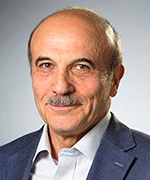 Mark Borodovsky
is a Regents' Professor in the Georgia Tech and Emory Department of Biomedical Engineering in
Atlanta, Georgia. His research focuses on computational genome analysis, particularly on developing
accurate algorithms for whole-genome gene prediction—the fundamental first step in deciphering the
multilayered functional information encoded in DNA sequences. This work led to the development of
the GeneMark family of gene finders, widely used for the annotation of prokaryotic and eukaryotic
genomes as well as metagenomes. He is the founder of the Georgia Tech graduate programs in
Bioinformatics and an elected Fellow of the International Society for Computational Biology.
Mark Borodovsky
is a Regents' Professor in the Georgia Tech and Emory Department of Biomedical Engineering in
Atlanta, Georgia. His research focuses on computational genome analysis, particularly on developing
accurate algorithms for whole-genome gene prediction—the fundamental first step in deciphering the
multilayered functional information encoded in DNA sequences. This work led to the development of
the GeneMark family of gene finders, widely used for the annotation of prokaryotic and eukaryotic
genomes as well as metagenomes. He is the founder of the Georgia Tech graduate programs in
Bioinformatics and an elected Fellow of the International Society for Computational Biology.
 Michel Daydé – CNRS/IRIT - Toulouse Institute for Research in Computer Science, University of Toulouse, Toulouse INP - National Polytechnic Institute of Toulouse.
Exascale Computing and New Computing Paradigms
Abstract: The importance of calculus does not appear clearly to the general public, even though it is at the heart of changes in our societies for example with artificial intelligence that benefits from the huge data volumes and computing resources available nowadays.
The talk is an attempt to cover the main topics related to exascale computing consequence of the growing application requirements. We enumerate some of the main exascale applications, and actually not only scientific, since they have a considerable impact at the societal (e.g. energy, health, environment, defense and security), economic and financial (e.g. industrial competitiveness) and ethical (e.g. biology) levels. Modeling, simulation and artificial intelligence are increasingly appearing as decision support tools for a number of critical situations such as natural disasters and climate change. We will also cover major issues such as energy consumption of supercomputers and have a look to some of the emerging computing paradigms: quantum, neuromorphic and molecular / DNA computing.
 Kim W. Tracy has extensive and varied experience with many different aspects of software development and in
computing education. He’s worked on a wide variety of software ranging from system software (UNIXâ and network systems at Bell Labs)
to database systems and expert systems during his over 30-year career. While at Bell Labs, he worked on a number of different
products including the 5ESSâ Telephone Switch as well as consulting for clients around the world. He also served as
Northeastern Illinois University’s Chief Information Officer for a decade and oversaw all aspects of the technology
used by the university. He’s taught many courses in computer science that include traditional computer science,
software engineering, cybersecurity, and information technology for many different universities, beginning part-time
over 30 years ago. He currently is a professor of practice for the Computer Science and Software Engineering
department at Rose-Hulman Institute of Technology. He’s also been heavily involved in ABET computing program
accreditation and in volunteer leadership roles in other professional societies. He’s recently authored a
textbook on software history for ACM Books and co-authored another book on object-oriented AI. He’s a senior
member of ACM and IEEE, a member of SHOT and currently serves as chair for the ACM History Committee.
Kim W. Tracy has extensive and varied experience with many different aspects of software development and in
computing education. He’s worked on a wide variety of software ranging from system software (UNIXâ and network systems at Bell Labs)
to database systems and expert systems during his over 30-year career. While at Bell Labs, he worked on a number of different
products including the 5ESSâ Telephone Switch as well as consulting for clients around the world. He also served as
Northeastern Illinois University’s Chief Information Officer for a decade and oversaw all aspects of the technology
used by the university. He’s taught many courses in computer science that include traditional computer science,
software engineering, cybersecurity, and information technology for many different universities, beginning part-time
over 30 years ago. He currently is a professor of practice for the Computer Science and Software Engineering
department at Rose-Hulman Institute of Technology. He’s also been heavily involved in ABET computing program
accreditation and in volunteer leadership roles in other professional societies. He’s recently authored a
textbook on software history for ACM Books and co-authored another book on object-oriented AI. He’s a senior
member of ACM and IEEE, a member of SHOT and currently serves as chair for the ACM History Committee.
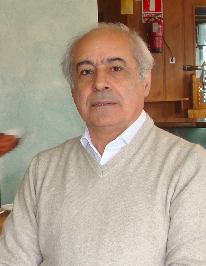 Dr. Levon Aslanyan began his scientific career in 1961 at the
Institute of Energetics of the Armenian SSR Academy of Sciences, later studying at Yerevan State
University and graduating with honors from Novosibirsk State University in 1968. From 1969 to 1972
he pursued postgraduate studies at the Computer Center of the USSR Academy of Sciences in Moscow.
He earned his PhD in Physics and Mathematics in 1976 and his Doctoral degree in 1997. He was awarded
the titles of Senior Researcher (1983) and Professor (2008), and in 2014 was elected a Corresponding
Member of the National Academy of Sciences of Armenia. He leads the Department of Discrete Mathematics
at the Institute of Informatics and Automation of the NAS RA.
Dr. Levon Aslanyan began his scientific career in 1961 at the
Institute of Energetics of the Armenian SSR Academy of Sciences, later studying at Yerevan State
University and graduating with honors from Novosibirsk State University in 1968. From 1969 to 1972
he pursued postgraduate studies at the Computer Center of the USSR Academy of Sciences in Moscow.
He earned his PhD in Physics and Mathematics in 1976 and his Doctoral degree in 1997. He was awarded
the titles of Senior Researcher (1983) and Professor (2008), and in 2014 was elected a Corresponding
Member of the National Academy of Sciences of Armenia. He leads the Department of Discrete Mathematics
at the Institute of Informatics and Automation of the NAS RA.
His research spans discrete analysis, including local algorithm efficiency, complexity of weakly
defined Boolean functions, logic-separation methods in pattern recognition, discrete isoperimetric
problems, and associative rule mining. He has supervised the development of practical systems such
as best-match search algorithms, cluster analysis software, seismic data preprocessing tools,
enterprise information systems, the ArmReader OCR for Armenian characters, and a network intrusion
detection system. Dr. Aslanyan has been active in scientific organization: co-founder of the
Bulgarian Institute for Information Theories and Applications (2003), member of editorial boards
of international journals, and participant in numerous international conference program committees.
Since 1997, he has served as Armenia’s National Contact Point for EU information and telecommunication
research programs.
He is the author of about 200 scientific publications and has lectured at universities across Europe.
Monotone Boolean Reconstruction
Abstract. Monotone Boolean reconstruction refers to a process in the field of combinatorial optimization
and information theory, where the goal is to recover a hidden binary function (a function that takes as input the values 0 or 1)
based on limited information obtained from observations. The term "monotone" indicates that the function maintains
the non-decreasing property: if one of the inputs is changed from 0 to 1, the output will not decrease.
In applications such as data mining and network analysis, reconstructing the structure of monotone
Boolean functions can help in understanding underlying relationships or dependencies within data.
This reconstruction problem is significant in various fields including economics, bioinformatics,
and machine learning. Key components of monotone Boolean reconstruction involve:
Observations: Limited data or samples that provide insights into the behavior of a Boolean function.
Reconstruction: The process of inferring the original function from the available observations, often
requiring algorithms and techniques from combinatorial and optimization theory.
Applications: Implications for various practical scenarios where understanding monotonic relationships
between variables is crucial.
The complexity of this problem can vary, and often involves algorithmic challenges, in particular,
to determining the minimum set of observations required for accurate reconstruction. Researchers use
different structural methods and mathematical frameworks to efficiently tackle such reconstruction tasks.
Boolean functions form a descriptive model of compatibility of sets of independent constraints,
but the class of all functions is unambiguously complex and it is of interest to find also relatively
simple subclasses of monotone functions. In this survey, we summarize existing results in the area of
monotone Boolean recognition, including those related to special classes of monotone Boolean functions.
Results related to the multivalued domain are also briefly presented.
 Dr. Yana Bromberg - Professor, Departments of Biology and Computer Science, Emory
Adjunct Professor, Coulter Department of Biomedical Engineering, Georgia Tech
Hans Fischer Fellow, Institute for Advanced Study, Technical University of Munich
Principal Fellow, Center for AI Learning, Emory
Director and Fellow of the International Society for Computational Biology
Dr. Yana Bromberg - Professor, Departments of Biology and Computer Science, Emory
Adjunct Professor, Coulter Department of Biomedical Engineering, Georgia Tech
Hans Fischer Fellow, Institute for Advanced Study, Technical University of Munich
Principal Fellow, Center for AI Learning, Emory
Director and Fellow of the International Society for Computational Biology
E-mail: [email protected]
http://www.bromberglab.org/
The primary focus of Dr.Yana Bromberg’s research is the concept of biological function as encoded in the DNA “blueprints” of life.
Specifically, she is interested in understanding the origins and mechanisms of the molecular machinery that underpins life.
She believes that machine learning (ML), and the more recent Artificial Intelligence (AI), tools hold great promise in
deciphering these functional details. Accordingly, her long-term goal is to use these advances, and other computational
techniques, to gain a deeper understanding of how biological functionality is encoded in genomic data, whether on the
level of individual genes, whole genomes, or metagenomes. The lab is currently working on implementing machine
learning-based models for understanding what function aspects (if any) are captured by protein language models,
how genome variants impact molecular function in association with disease, and whether metagenome functionality
can be inferred from sequencing reads (it can be!).
Dr. Bromberg received her degrees from SUNY Stony Brook (Computer Science and Biology) and Columbia University (Biomedical Informatics).
Her work has been recognized by private and federal agencies, including NASA, NSF, and NIH. She is a fellow of the Institute
for Advanced Study at the Technical University of Munich, Principal Fellow of the Center for AI Learning at Emory, and a
Director of the International Society for Computational Biology.
Quantifying uncertainty of biological molecule representations
Abstract. Latent space embeddings, derived by language models, are widely used as numeric proxies for human language sentences and structured data. In the realm of biomolecules, embeddings serve as efficient sequence and/or structure representations, enabling similarity searches, structure and function prediction, and estimation of biophysical and biological properties. However, relying on computed embeddings without assessing the model’s confidence in its ability to accurately represent molecular properties is a critical flaw—akin to using a scalpel in surgery without verifying its sharpness.
We propose a means to evaluate the ability of protein language models to represent proteins, assessing their capacity to encode biologically relevant information. Our findings reveal that low-quality embeddings fail to capture meaningful biology, displaying vector properties indistinguishable from those of randomly generated sequences. A key contributor to this performance issue is the models’ failure to learn the underlying biology from unevenly distributed sequence spaces in the training data.
Our novel, model-agnostic scoring framework is the first to quantify protein sequence embedding quality. We believe that our robust approach to screening embeddings prior to making biological inferences, stands to significantly enhance the reliability of downstream applications.
 The group of Professor Dr. Dmitrij Frishman - (b. 1961) develops bioinformatics algorithms and
software to support high-throughput biological research at the intersection of structural genomics and proteomics.
He is particularly interested in the evolution, structural diversity, and interactions of transmembrane proteins.
Other research directions include bioinformatics of viruses, evolution of mRNAs, and cancer informatics.
The group of Professor Dr. Dmitrij Frishman - (b. 1961) develops bioinformatics algorithms and
software to support high-throughput biological research at the intersection of structural genomics and proteomics.
He is particularly interested in the evolution, structural diversity, and interactions of transmembrane proteins.
Other research directions include bioinformatics of viruses, evolution of mRNAs, and cancer informatics.
Professor Frishman studied Biomedical Electronics at the Saint Petersburg Electrotechnical University (1984)
and received a PhD in Biochemistry from the Russian Academy of Sciences (1991). Supported by a Humboldt Fellowship,
he pursued postdoctoral research at the Biocomputing Department of EMBL in Heidelberg (1991–1996). He subsequently
joined the Munich Information Center for Protein Sequences as a senior scientist and later became Deputy Director
of the Institute for Bioinformatics at the German Research Center for Health and Environment. In 1997, he co-founded
Biomax Informatics AG. Professor Frishman was appointed to TUM in 2003.
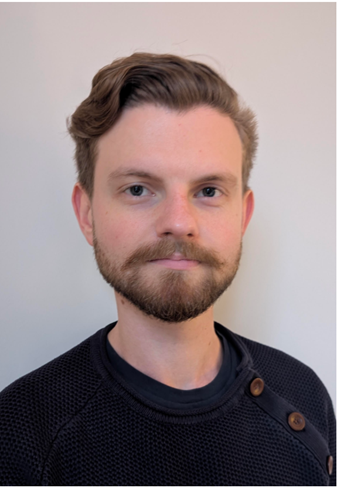 Andrey Bzikadze is an Applied Scientist and a Technical Lead at Amazon, working on projects
that utilize machine learning for life science applications (Amazon Special Projects, San Francisco, CA).
Andrey Bzikadze is an Applied Scientist and a Technical Lead at Amazon, working on projects
that utilize machine learning for life science applications (Amazon Special Projects, San Francisco, CA).
In 2022, Andrey graduated from Pavel Pevzner's lab in University of California, San Diego where his research
was focused on computational methods for genome assembly, human centromere biology, and immunoinformatics.
Andrey is a member of the international Telomere-to-Telomere (T2T) Consortium. During his doctorate, Andrey
presented the first algorithm for automated assembly of a human centromere.
Andrey used this workflow to generate and validate the first complete assembly of a human genome developed by the T2T Consortium
 Roland Duduchava - Professor, Director of the V. Kupradze Institute of Mathematics, The University of
Georgia, Head of a Department at A. Razmadze Mathematical Institute Ivane
Javakhishvili Tbilisi State University, Former stipendiant of Humboldt Foundation
and Professor-Merkator of DFG (Germany), [email protected]
Roland Duduchava - Professor, Director of the V. Kupradze Institute of Mathematics, The University of
Georgia, Head of a Department at A. Razmadze Mathematical Institute Ivane
Javakhishvili Tbilisi State University, Former stipendiant of Humboldt Foundation
and Professor-Merkator of DFG (Germany), [email protected]
Modelling of Shell Equation on a Hypersurface With Γ-Convergence
We consider boundary value problems (BVPs) of bending elastic isotropic thin media Ωh:
C ×[−h, h] around a surface C with the Lipshitz boundary Γ := ∂C, governed by the L´ame
equation L = −μΔΩh − (λ + μ)∇ΩhdivΩh. The object of the investigation is what happens
with the boundary value problems when the thickness of the layer diminishes to zero h→0.
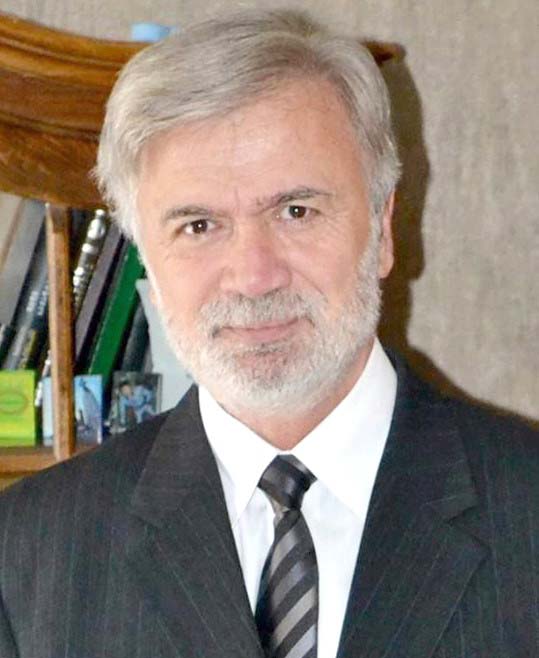
 Sergo Tsiramua – Dr., professor at the University of Georgia, School of Science and Technologies, Department of Informatics,
Director of Institute of Informatics [email protected]
Sergo Tsiramua – Dr., professor at the University of Georgia, School of Science and Technologies, Department of Informatics,
Director of Institute of Informatics [email protected]
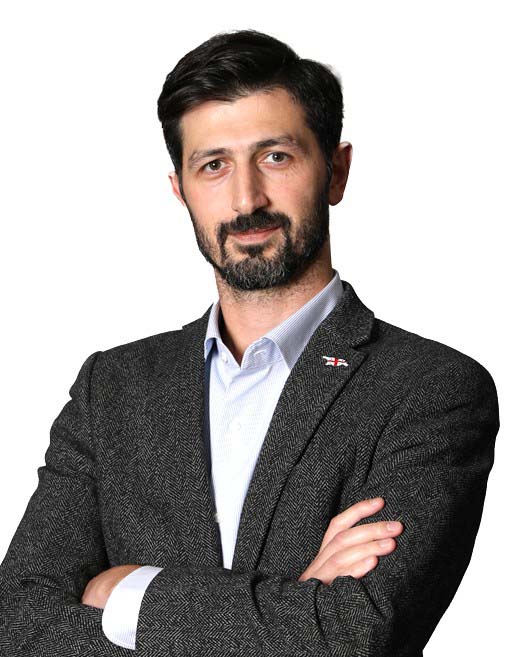
George Tsiramua – Head of Business Technology Department, Toyota Caucasus; Founder, OptiCrew,
[email protected]
Logical-Combinatorial Modeling of Reconfigurable Organizational Systems with Multifunctional Elements
Organizations often focus on hiring highly skilled specialists—top engineers, designers, and project managers—assuming that individual expertise
will naturally lead to project success. But in practice, such teams can become rigid and difficult to adapt.
McKinsey studies show that over 75% of teams without proper structural integration fail to meet key delivery goals — not due to a lack of talent,
but due to fragile team design.
To challenge that we created OptiCrew – a platform that helps organizations build flexible, balanced and resilient teams based on multifunctional personnel.
Opticrew is built on logical-combinatorial and logical-probabilistic mathematical models, which helps in creating structurally reconfigurable teams.
Structural reconfiguration is achieved through the multifunctionality of system elements, enabling interchangeability and replacement in cases of partial
or complete failure.
Each team member is assessed across all potential roles, and optimization algorithms identify the best team configuration and role allocation.
Scenario-based simulations—unavailability, performance drops, and scope changes—evaluate team robustness under stress. Teams with interchangeable
personnel demonstrate higher reliability and reduced need for external replacements. Additionally, AI and natural language processing convert
behavioral data into quantitative indicators, while Generative AI identifies skill gaps and provides targeted recommendations to improve team
adaptability and performance.
Conference Proceedings
All accepted papers will be published in the ICICS 2026 Proceedings and indexed in major digital libraries. Selected high-quality papers will be invited for journal publication.
View ProceedingsRecomended Hotels:
Holiday Inn, 1, 26 May Square, Tbilisi 0171 Georgia
Ameri Plaza Tbilisi, Kostava st. 76A, Tbilisi 0171 Georgia
Ibis budget Tbilisi Center, 22 Giorgiy Akhvediani st, 0108 Tbilisi, Georgia
Social Program & Cultural Heritage
The ICICS 2026 conference offers a rich social program including a welcome reception, gala dinner, and guided tours of Tbilisi’s historical landmarks and Georgian cultural heritage sites.